








Connecting
Programs for Parents
Our parenting programs focus on individual and family well-being, as well as understanding Canadian parenting norms and expectations. In partnership with the Community Action Program for Children (CAPC), these programs are delivered through classes, group sessions, one-on-one counselling and home visits.


Bond to Literacy
Bond to Literacy
Bond to Literacy (BTL) is a family-focused early literacy program designed for children ages 2 to 5. It offers engaging, school-like activities that build foundational reading and writing skills while supporting children’s early learning. Through fun lessons that explore values, cultural awareness, and language development, children are not only prepared for formal schooling but also gain a richer understanding of their own cultural heritage. BTL creates a classroom-like atmosphere with a flexible, easy-to-follow structure that can be used both in person and at home. This approach nurtures a love for reading and strengthens family involvement in children’s learning. Through all, the goal is to help parents and children connect more deeply, building stronger relationships while supporting children’s early literacy and overall development.

Cross-Cultural Parenting
Cross-Cultural Parenting
This program offers newcomers a unique opportunity to ease their transition into a new community and culture. In a supportive group environment, participants can share their experiences, learn from one another, and better understand local resources, cultural norms, and day-to-day expectations. Further, the program guides parents in developing awareness of different parenting styles within their new environment, while also helping them understand Canadian lifestyles and the Canadian education system. Parents gain insight into how schools and daycare operate, preparing them to recognize cultural differences and respond confidently as their children adjust to these settings. Opportunities are created for parents to practice spoken English, build communication skills, and strengthen their ability to support their children and families as they settle into life in Canada.

Family Strengthening Groups
Family Strengthening Groups
Psycho-educational group sessions for men and women to deliver resources and strategies which enables them to express emotions and manage conflicts among their family members positively without using physical and/or emotional violence.

Fast Track to Learning and Interactions for Parents
Fast Track to Learning and Interactions for Parents
FLIP aims to assist refugee families with young children between the ages of 3-5. This 12-week program provides 12 weeks of toys, materials and instruction that covers the areas of literacy, creative play, physical play and family activity.
As part of the program, a trained “animator” delivers (in person) the content of the program which includes instruction in English, Dari, Pashto and Ukrainian. A short visit occurs with an explanation of the materials and instruction is provided to parents so they can perform the activities with their children.
This program is funded through @mothersmattercentre in Vancouver and is intended to serve refugee families.

Food for Thought
Food for Thought
Food for Thought is a welcoming prenatal nutrition program designed for pregnant refugee and immigrant women, international students, and spouses who may be feeling isolated or facing extra challenges. Through a strong partnership between the Saskatoon Open Door Society and the Saskatoon Health Region, this program is co-facilitated by staff from both organizations and takes place at the West Wind Primary Health Centre.
Supported by the Canada Prenatal Nutrition Program, Food for Thought offers more than nutrition education—it creates a supportive community where families can build connections, ask questions, and learn how to access public health resources and local services. The goal is to help expectant parents feel supported, informed, and confident as they prepare to welcome their new baby into the world.

Home Instruction for Parents of Preschool Youngsters
Home Instruction for Parents of Preschool Youngsters
HIPPY is a new program beginning in Fall 2020 for newcomer parents with children 3-4 years old that provides the materials and support to engage preschoolers in reading, writing, language, math, science, and motor skills. Space limited.
Move and Advance to Regulated Childcare
Move and Advance to Regulated Childcare
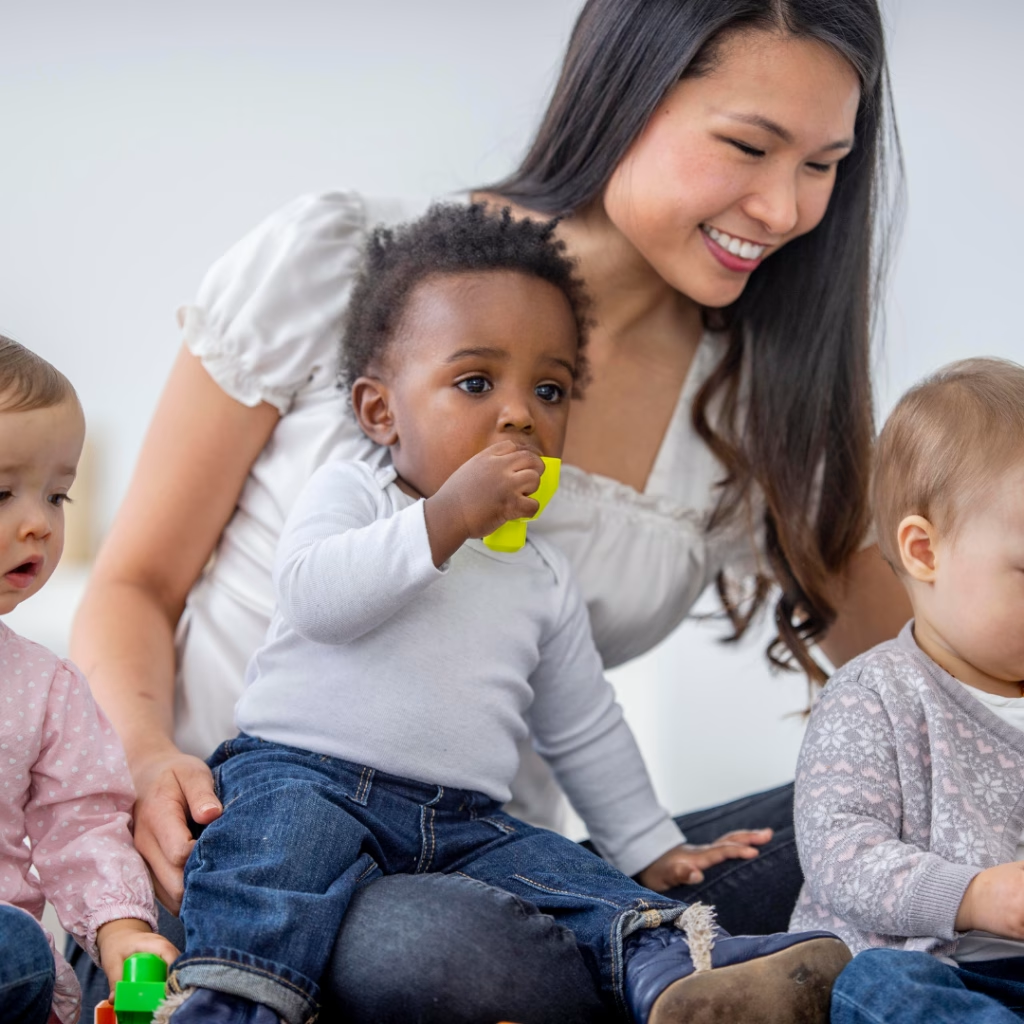
This program helps participants understand the complexities of operating a child care home business and will help you to submit an application to The Ministry of Education Early Years Branch to begin the process of becoming a regulated home child care operator. This program will help you MARCH from a passion to a profession.
Many newcomers arrive with rich caregiving experience but face challenges navigating Canada’s childcare system and understand the extensive regulations and business processes. This workshop fills that gap — combining practical learning, application support, and connections with experts — to make the path to becoming a regulated child care provider clear and achievable.
This program is designed for newcomer women in Saskatchewan who:
– Have experience caring for children or a strong interest in early childhood development.
– Wish to operate their own regulated home child care business.
– Want to learn about licensing requirements, safety standards, and business operations in Saskatchewan.
This workshop is funded by The Ministry of Education and proudly offered as an initiative of the Saskatoon Open Door Society (SODS), in collaboration with:
– St. John Ambulance – for First Aid & CPR certification
– Women’s Business Hub Food & Catering Program – for Food Safe Handling training

Parent Talk
Parent Talk
In educational workshops, new mothers with babies less than 6 months old learn about preparing food for their infant, speech and language development, dental health and the importance of play. Childcare and transportation are available.

Prenatal Hospital Tour
Prenatal Hospital Tour
To help expecting parents feel safe and confident in preparing for the delivery of their baby, we provide information and a tour of the maternity ward at Royal University Hospital.